The Best Protein Powder for Runners

Endurance athletes need protein too, often more than they think. Here is how runners should choose, time, and format their protein to support training without weighing down sessions.
Runner-specific wins. Clear whey for hot weather and post-run hydration. Lighter RTDs for travel and race-day kit. Optional collagen for tendons.
Why endurance athletes need more protein than they realize
Common assumption: protein is for lifters. Reality: endurance training is also catabolic, breaking down muscle and connective tissue over high volumes of repeated impact. Without sufficient protein, recovery slows and chronic soft-tissue issues become more likely.
Current sports nutrition consensus puts endurance athlete protein needs at 1.2 to 1.4 grams per kilogram of body weight, compared to 0.8 for sedentary adults and 1.6 to 2.0 for resistance athletes. A 70kg (155lb) runner training six hours a week needs roughly 85 to 100 grams of protein daily, easily missed without conscious effort.
Formats that work for runners
Traditional creamy whey shakes are fine for normal recovery contexts but can sit heavy in the stomach during hot weather or immediately after long runs. Two alternatives have emerged: clear whey and lighter RTDs.
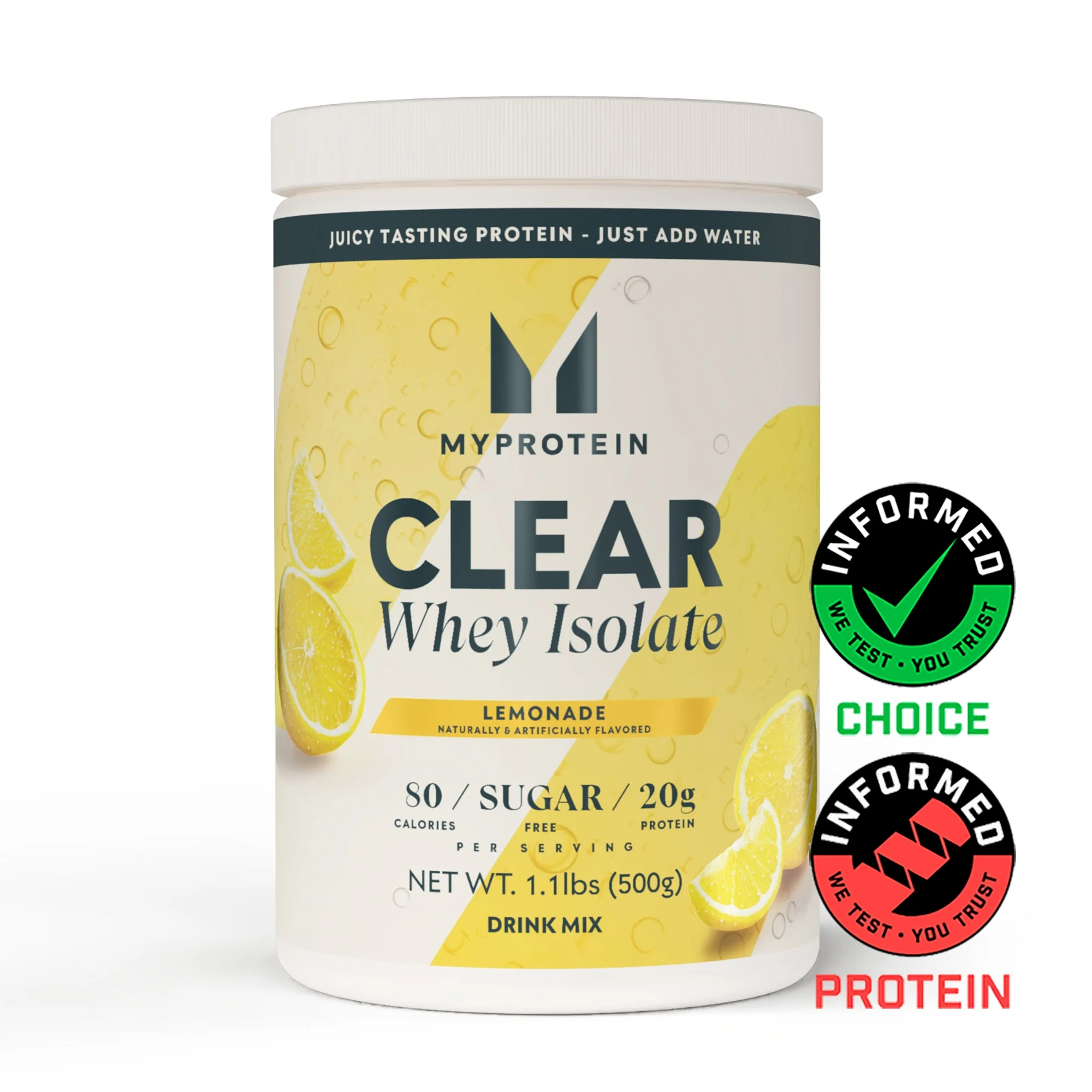
Clear whey is whey isolate processed to remove the cloudiness, leaving a juice-like beverage when mixed with water. Lemonade, raspberry, and tropical flavors dominate. Lower on milky mouthfeel, higher on hydration appeal.
Lighter ready-to-drink shakes (Premier Protein, Fairlife) are convenient post-run or race-morning options. They travel well and require no shaker.
| Format | Best use case | Drawback |
|---|---|---|
| Whey isolate shake | General daily protein | Creamier mouthfeel post-run |
| Clear whey | Hot weather, post-long-run | Lower protein per scoop |
| Premier-style RTD | Travel, race-day kit | Higher cost per gram |
| Pea-rice blend | Plant-based runners | Slightly grittier texture |
| Collagen + vitamin C | Pre-training tendon support | Optional, niche use |
How to time protein around running
On training days, target 25 to 35 grams within the hour after the session. For long runs over 90 minutes, a small carb-protein mix during the second half can blunt muscle breakdown.
On rest days, spread protein across three to four meals to maintain a steady amino acid supply. Skipping a shake on rest days is fine; skipping protein entirely is not.
For race week, do not introduce new shakes. Stick to formulas your gut already knows.
Runner-friendly options on the site
The clear whey category is a small but growing segment dominated by MyProtein. Browse by Value Score for current leaders.
The RTD category contains the Premier Protein and Fairlife lineups that work for race-day kit.
For daily shakes, the isolate category covers most runner needs.
Common runner protein mistakes
Underestimating daily needs. A 60 kg runner doing high mileage often needs 80+ grams daily and falls short on a meatless or low-effort diet.
Skipping post-run protein because "I am not lifting." Endurance recovery still demands protein.
Introducing new flavors race week. Stick to known-tolerated products.
Dosing protein around long runs
For runs over 90 minutes, the protein-carb mix becomes more important than for shorter sessions. Studies on ultraendurance athletes suggest that 0.2 to 0.4 grams of protein per kilogram of body weight in the post-run hour, combined with 1.0 to 1.2 grams of carbs per kilogram, optimizes recovery for the next training session.
For a 70 kilogram runner, that translates to 14 to 28 grams of protein and 70 to 84 grams of carbs within an hour of finishing. A whey isolate shake plus a banana and a slice of toast covers this comfortably.
For shorter daily runs under an hour, the math is simpler: 20 to 25 grams of protein within the post-run hour, ideally paired with some carbs. A standard shake with milk and a piece of fruit does the job.
Race-day and travel kit
For race weekends and travel, format matters more than peak performance metrics. RTDs (Premier Protein, Fairlife) are TSA-friendly under 3.4 ounces (the smaller 11-ounce shakes are airline-allowed only in checked bags), reliable in flavor, and require no preparation.
Travel-ready bar boxes (Pure Protein, Built Bar) work for hotel rooms without fridges. Single-serve powder packets work if you bring a shaker bottle.
A common runner travel kit: 6 RTDs, 4 to 6 bars, one shaker, and one travel-sized vanilla isolate tub. Covers a long weekend race trip with no quality compromise.
A simple runner protein stack
Daily: a whey isolate shake post-run with water or milk. Hot training days: a clear whey serving with cold water. Race-day kit: one Premier-style RTD in the bag, plus a bar.
Optional add-ons: collagen pre-training for chronic tendon issues, casein evenings during high-volume blocks. Most runners do not need more than the core daily shake.
The bigger lever for endurance athletes is total daily protein intake, which is often undershot. Establish that habit first; format optimization comes later.